

In the digital age, the integrity of a signed document is the cornerstone of business operations. For training centers and organizations, “proxy attendance”—the practice of one individual signing for another—has evolved into a critical risk. As we approach 2026, regulatory compliance demands a robust digital signature solution to ensure legal validity and prevent unauthorized access to funding.
Traditional handwritten signature methods and simple online checkboxes are no longer sufficient to meet compliance requirements. In the healthcare, real estate, and financial sectors, a forged record can lead to potential data breaches and legal challenges.
For businesses relying on public funding, preventing fraud is essential. A tamper-evident audit trail is now a standard requirement to maintain trust with regulatory bodies. Without robust security measures, an organization faces the risk of repudiation where a signatory claims they never signed the agreement.
To ensure compliance, it is vital to understand the technology behind the solution. A secure document relies on Public Key Infrastructure (PKI).
Deep Dive: Choosing the right level of security and compliance is key. Read our guide on the 3 types of electronic signatures to see how they fit into the eIDAS regulation.
Still managing attendance manually?
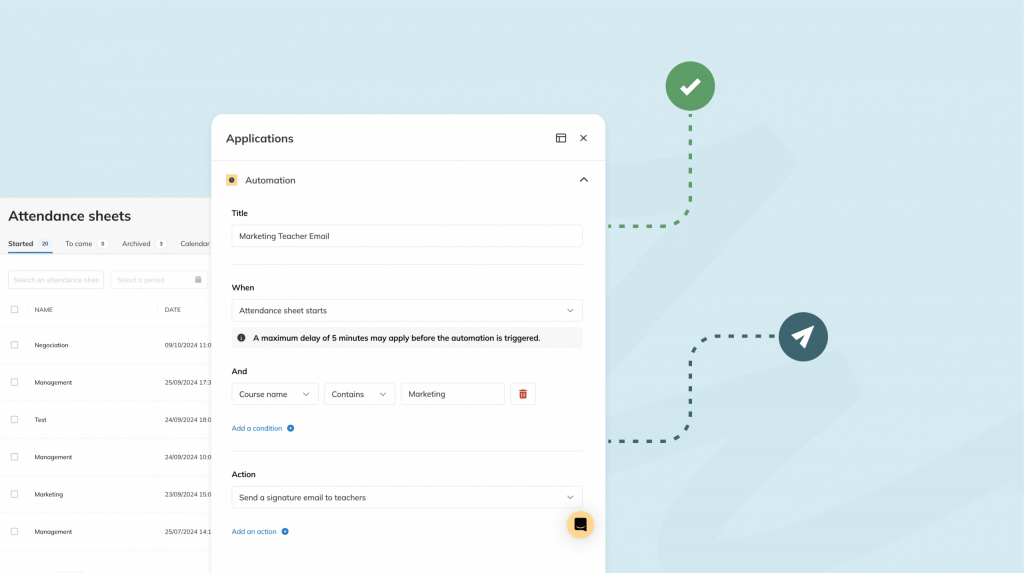
Edusign automates attendance tracking and generates signed sheets in one click.
The future of digital attendance relies on biometric authentication, including facial recognition and multi-factor authentication. This strong authentication ensures that the individual signing is physically present, effectively reducing the potential for proxy signing.
Moving to electronic signing leads to a total transformation of workflows. Businesses can improve efficiency and achieve significant cost savings by eliminating paper storage and manual processes. In fact, Edusign helps users spend 5x less time on attendance management.
In 2026, cross-border transactions require a uniform legal framework for electronic signatures. By following international standards and laws and regulations, Edusign ensures your contracts and attendance sheets have full enforceability under the law.
A modern esignature tool must be user-friendly and accessible via mobile platforms. Edusign’s software provides a seamless integration with your existing workflow, whether you use a board management platform or an LMS.
Your policy on data protection and retention is vital. A digital signature solution ensures that every signed document is stored securely, protecting the signatory and the organization for years to come.
The adoption of digital signatures is accelerating thanks to emerging technologies.
To enhance your operations, follow these best practices:
Search
Recent articles

Copyright © Edusign
Train delays, being held up at work, family issues, etc. So many unforeseen events can excuse delays or absences. However, these are not without consequences
At Edusign, we understand that attendance is a determining factor in the success of both academic and professional training programs. As experts in the
Follow our step-by-step guide to setting up and completing attendance sheets in your training organisation. Discover digital solutions that save time and ensure compliance.